

Types
Position
Layout
blog
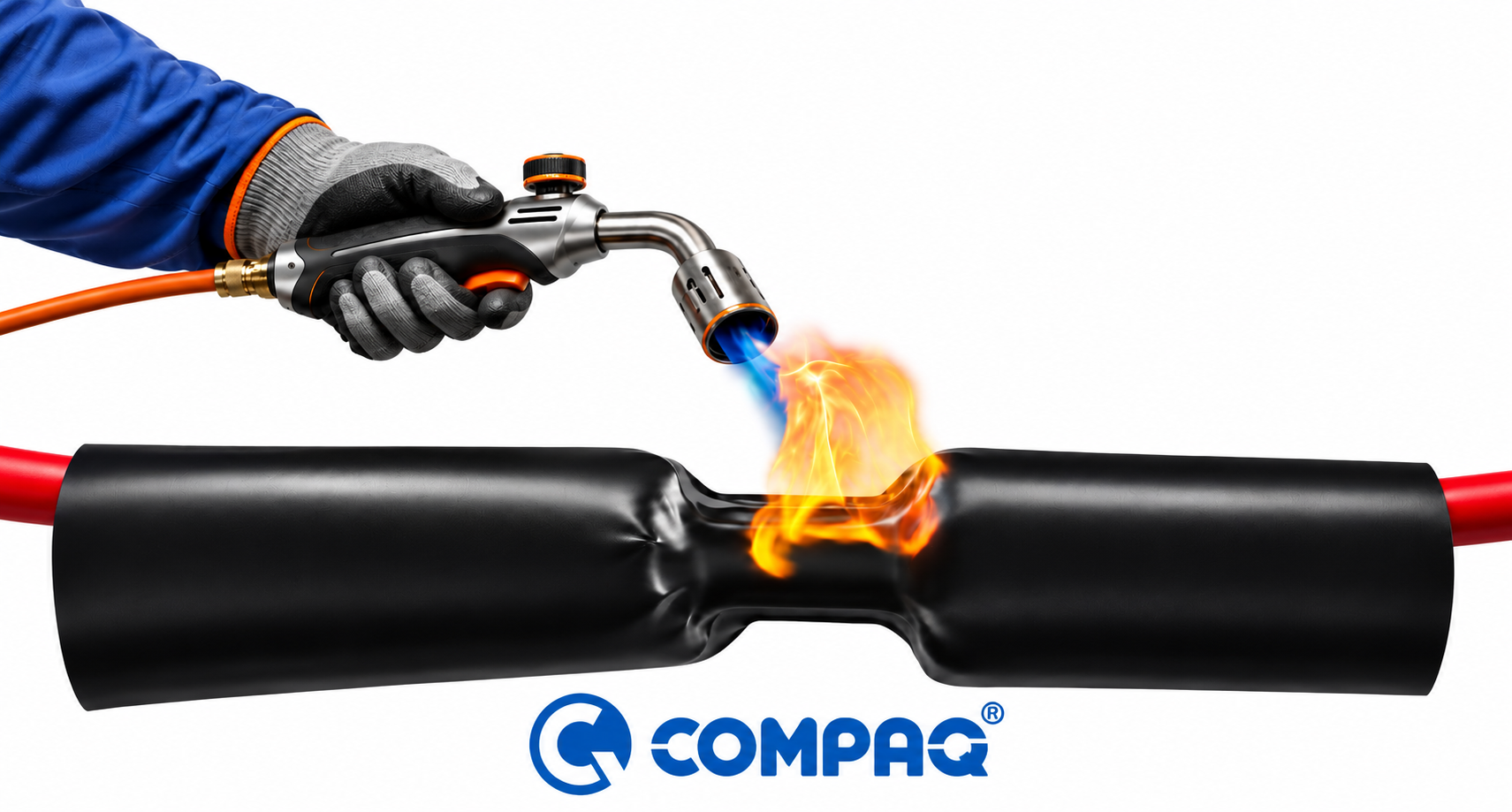
A heat shrink tube may fit over a cable joint before installation and still be the wrong size for the job. It must also recover properly over the smaller cable diameter, provide the required wall thickness and, where specified, seal against moisture.
For underground cables and exposed connections, these details matter. Selecting a tube only by its supplied diameter can leave the installation short of the protection it needs.
Heavy wall heat shrink tubing provides a thick protective covering after recovery. When heated according to the installation instructions, the tube reduces in diameter and conforms around the cable or joint assembly.
The recovered wall provides insulation and mechanical protection according to the tube specification and application. Adhesive-lined versions add a sealing layer between the tube and the prepared surface beneath it.
The choice between medium wall and heavy wall tubing should follow the required recovered thickness, available space, sealing arrangement and service conditions. A thicker tube still needs to be correctly sized and installed.
In a low voltage cable joint, a suitable heavy wall tube can provide insulation over the connector as part of the specified joint construction.
In a medium voltage cable joint, heavy wall tubing is commonly used as the outer protective covering. Here, its role is to protect the completed joint assembly and support environmental sealing.
An outer protection tube does not replace the stress control, insulation or screening components within an MV joint. The suitability of the complete joint depends on its design and tested configuration.
In an adhesive-lined tube, heat recovers the outer wall and softens the internal hot-melt adhesive. With suitable surface preparation and heating, the adhesive flows against the cable sheath and other specified sealing surfaces.
This helps restrict moisture entry at those interfaces. The seal depends on the correct tube size, compatible surfaces, the specified overlap and proper installation.
An uncoated tube may provide insulation or mechanical protection where specified, but it should not be assumed to provide the same moisture sealing as an adhesive-lined construction.
Correct sizing is only part of the work. Sealing surfaces must be prepared as instructed and kept clean and dry. Position the tube accurately, use the specified heating method and apply heat evenly to avoid local overheating.
Check recovery and sealing against the installation instructions, then allow the assembly to cool before handling or moving it. For a jointing kit, follow the complete kit instructions, including the specified component sequence and overlap dimensions.
COMPAQ International has manufactured medium and heavy wall heat shrink tubing at its Haryana facility since 1998. Tubes are available as individual components as well as within cable accessory systems.
The COMPAQ CHWT range uses cross-linked polyolefin and is available with or without hot-melt adhesive lining. Black, UV-resistant tubing supports outdoor cable protection, subject to the selected product specification.
In-house compounding, extrusion and expansion give COMPAQ control over the development and manufacture of its tubing. Lengths and markings can be specified to suit project requirements.
For tube selection, share the cable and joint diameters, application, required length and installation conditions with COMPAQ. These details help identify a suitable tube before work begins on site.
For technical enquiries write us at [email protected], or visit us at https://compaqinternational.com/product/heavy-wall-heat-shrink-tubing

Need Help?
Our experts are ready
Our experts are available for on-site support, remote
guidance and tailored engineering.