

Types
Position
Layout
blog
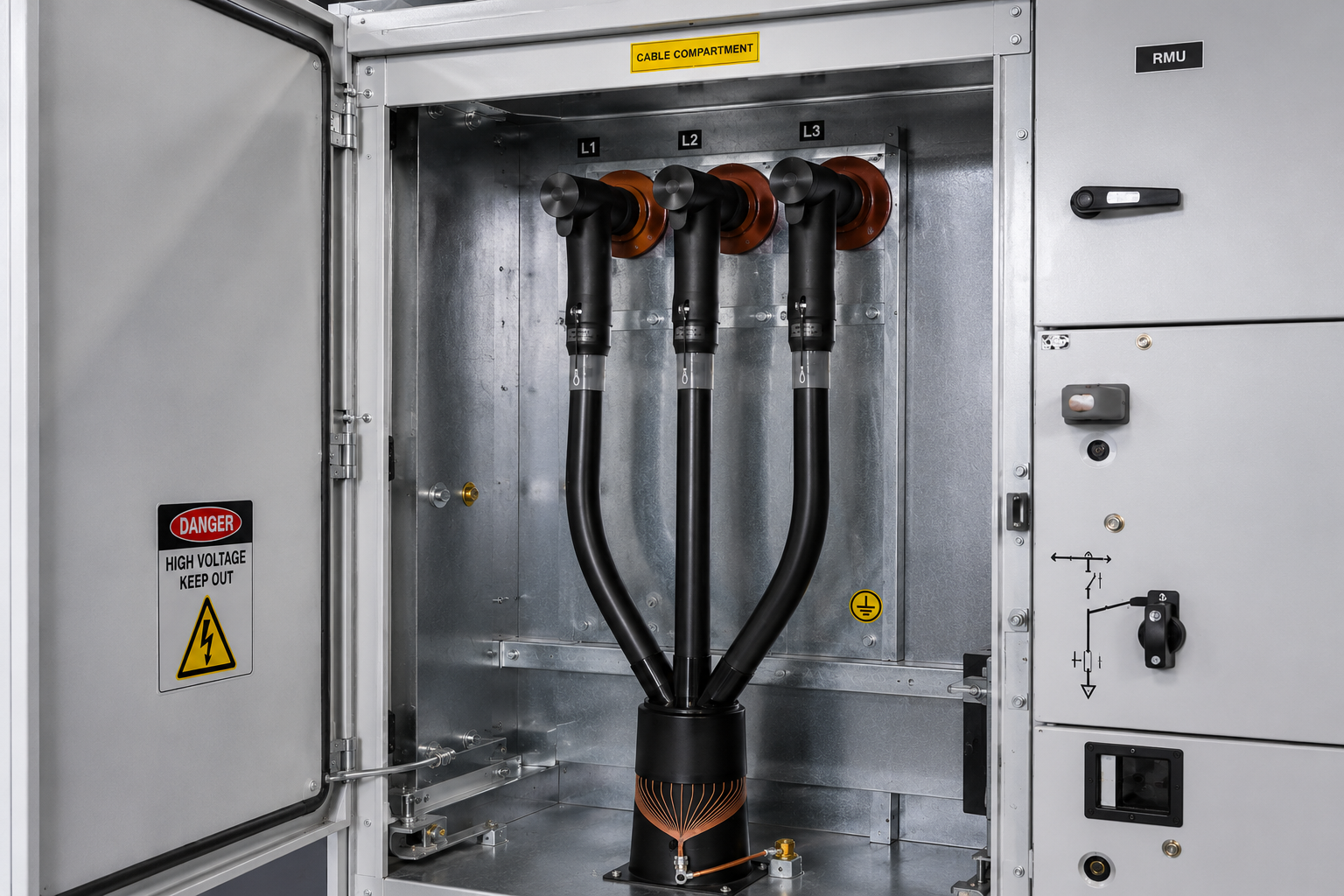
Modern power distribution networks demand equipment that is safe, reliable, compact, and easy to maintain. Whether it is a Ring Main Unit (RMU), transformer, switchgear or compact substation, one component quietly plays a major role in keeping power flowing- the medium voltage T-body separable connector.
Although it looks simple from the outside, a T-body connector is a highly engineered cable accessory designed to provide insulation, electrical stress control, environmental sealing and a fully screened connection between the power cable and electrical equipment.
In this guide, we'll explain what a T-body connector is, how it works, where it is used, and what engineers should consider before selecting one.
A T-body separable connector is a screened, fully insulated plug-in cable termination designed for medium-voltage underground power cables.
It connects an XLPE insulated cable directly to equipment such as:
Unlike conventional outdoor terminations, a T-body connector plugs directly onto a standardized equipment bushing, creating a compact and touch-safe connection.
Its "T" shape comes from the horizontal equipment connection and the vertical cable entry.
The connection can be disconnected when the system is de-energized.
This offers several advantages:
That flexibility is one reason why utilities increasingly prefer separable connectors over traditional hard-wired terminations.
A typical screened separable connector consists of several carefully designed components working together.
Conductive Outer Screen
The outer conductive layer remains at earth potential, making the connector touch-safe.
EPDM or Silicone Insulation
Provides electrical insulation while maintaining flexibility throughout service life.
Stress Control System
The highest electrical stress occurs where the cable screen ends.
The stress control geometry redistributes the electric field, preventing:
This is one of the most critical design features.
Compression or Mechanical Connector
Joins the cable conductor with the equipment interface.
Depending on the design, it may use:
Sealing System
Multiple sealing surfaces prevent:
Proper sealing greatly improves long-term reliability.
Earthing Point
The conductive outer screen is bonded to earth, ensuring operator safety.
Once installed:
The result is a compact, reliable cable termination suitable for indoor and outdoor installations.
You'll commonly find them in:
Ring Main Units (RMUs)
Probably the most common application.
RMUs in urban distribution networks almost always use screened separable connectors because they save space and improve safety.
Distribution Transformers
Compact transformers often use plug-in connectors instead of conventional porcelain bushings.
Wind Farms
Wind turbine transformers rely heavily on separable connectors due to limited installation space.
Solar Power Plants
Modern solar substations use them for medium-voltage collector systems.
Industrial Plants
Factories appreciate their compact size and ease of maintenance.
Metro Rail Systems
Underground infrastructure benefits from touch-safe cable terminations.
Data Centres
Reliable medium-voltage distribution is essential for uninterrupted operations.
Safety.
The conductive outer layer keeps the entire outer surface at earth potential.
This means maintenance personnel cannot accidentally touch energized insulation.
Benefits include:
Many engineers confuse these terms.
Deadbreak Connector
Can only be disconnected when the circuit is de-energized.
Most 630 A T-body connectors belong to this category.
Loadbreak Connector
Designed to interrupt current safely while disconnecting under specified load conditions.
These are commonly used in switching applications.
Understanding this difference is important during equipment selection.
Common Standards
High-quality separable connectors are generally designed and tested according to internationally recognized standards such as:
The equipment interface (A, B, C, F, etc.) must always match the mating bushing.
Most connector failures are not caused by the rubber body itself.
They usually result from installation or preparation errors.
Common reasons include:
Poor Cable Preparation
Incorrect removal of insulation or semiconductive screen can create stress concentrations.
Improper Connector Crimping
Incorrect crimping increases electrical resistance and heating.
Moisture Entry
Contamination during installation can eventually lead to insulation breakdown.
Incorrect Torque
Bolts tightened below or above the specified torque can reduce reliability.
Wrong Interface Selection
A connector designed for one interface cannot be safely installed on another.
Poor Earthing
An improperly bonded screen compromises touch safety.
Before choosing a connector, engineers should confirm:
Selecting only by cable size is a common mistake.
Good products still depend on good installation.
Always:
Small installation mistakes can significantly reduce service life.
Utilities worldwide increasingly choose separable connectors because they offer:
For modern underground distribution systems, they have become the preferred cable termination solution.
Final Thoughts
A medium-voltage T-body separable connector is much more than a simple cable termination. It combines electrical insulation, stress control, moisture sealing and touch-safe screening into a single engineered solution that keeps power systems reliable for decades.
Whether the application is an RMU, transformer, renewable energy project or industrial distribution network, selecting the right connector and installing it correctly has a direct impact on long-term network performance.
As underground power systems continue to expand, screened separable connectors will remain one of the most important components in modern medium-voltage distribution.
What is a T-body separable connector?
A fully insulated, screened medium-voltage cable connector that plugs directly into standardized equipment bushings.
What is the difference between a deadbreak and loadbreak connector?
A deadbreak connector must only be disconnected when the circuit is de-energized, while a loadbreak connector is designed to interrupt specified load current safely.
Where are T-body connectors used?
They are widely used in RMUs, transformers, switchgear, compact substations, renewable energy plants, industrial facilities and underground distribution networks.
Why is stress control important?
Stress control smooths the electric field at the cable screen cut, preventing partial discharge, insulation deterioration and premature failure.
How long does a high-quality separable connector last?
When correctly selected, installed and operated within its design limits, a quality screened separable connector can provide reliable service for decades.
COMPAQ International manufactures screened separable connectors engineered for dependable performance in RMUs, transformers and underground distribution systems. Our solutions are designed for reliable insulation, effective stress control, environmental sealing and long-term field performance, backed by technical support for utilities, EPC contractors and industrial projects worldwide. For more information write us at [email protected]

Need Help?
Our experts are ready
Our experts are available for on-site support, remote
guidance and tailored engineering.