

Types
Position
Layout
blog
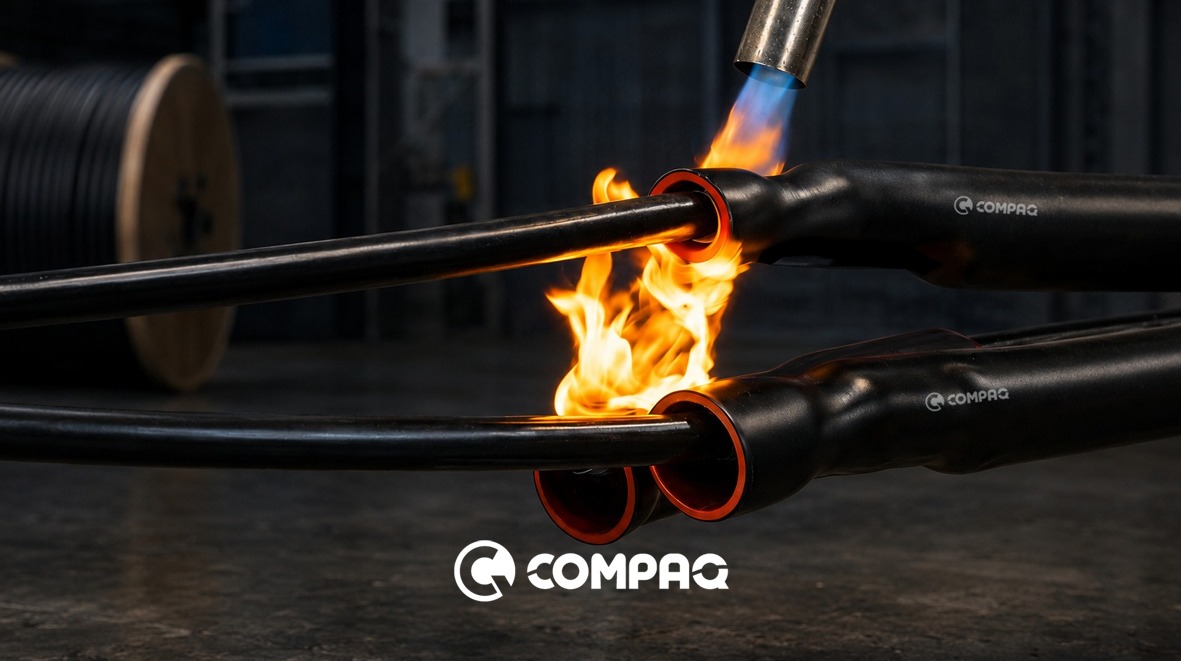
Medium voltage cable networks form the backbone of modern electrical infrastructure. Whether supplying power to industrial facilities, renewable energy plants, or urban distribution systems, the reliability of these networks depends heavily on the integrity of cable accessories such as joints and terminations.
While cables themselves are engineered for decades of service, many system failures originate at the connection points. Cable joints, in particular, are exposed to concentrated electrical stress, thermal cycling, moisture exposure, and mechanical loads. Even small imperfections in insulation or installation can lead to partial discharge, insulation degradation, or premature failure.
One of the most significant technological developments addressing these challenges is triple extruded tubing technology. By integrating multiple functional layers into a single engineered component, triple extruded tubing improves electrical performance, reduces installation complexity, and enhances the long-term reliability of medium voltage cable accessories.
This article explains the engineering principles behind triple extruded tubing and why it plays an essential role in improving electrical reliability in modern power networks.
When a medium voltage cable is jointed, the original cable insulation system is interrupted. The conductor connection, screen cut, and insulation interfaces create regions where the electric field distribution changes abruptly.
If these areas are not properly controlled, several issues can occur:
• Localized electrical stress concentration
• Partial discharge activity
• Electrical treeing within insulation materials
• Thermal degradation due to dielectric losses
• Moisture ingress through weak interfaces
Over time, these phenomena can lead to insulation breakdown and joint failure.
For this reason, cable jointing technology must restore the electrical field distribution as closely as possible to that of the original cable.
This is where multi-layer engineered tubing systems such as triple extruded tubing become critical.
Triple extruded tubing is an advanced insulation component manufactured using a co-extrusion process, where three polymer layers are extruded simultaneously to form a single integrated tube.
Each layer performs a specific electrical or mechanical function.
Typical layer configuration includes:
Outer Conductive Layer: Restores the cable screen and ensures controlled electrical stress distribution.
Insulating Layer: Provides the main dielectric barrier required for medium voltage operation.
Inner Elastomeric Layer: Maintains high interface pressure and adapts to cable dimensional variations during thermal cycling.
Because the layers are extruded together during manufacturing, they form a uniform, void-free structure that significantly improves electrical performance compared with separately assembled components.
Electrical stress control is one of the most important aspects of cable joint design.
The conductive outer layer of the triple extruded tube recreates the cable screen, while the insulating layer restores the dielectric structure. This combination ensures that electrical stress transitions smoothly across the joint area.
By eliminating sharp stress gradients, the risk of partial discharge and electrical treeing is significantly reduced.
Air voids are among the most common causes of medium voltage joint failure.
When insulation components are installed separately, small air gaps can remain between layers. Under high electrical stress, these voids can become sites for partial discharge activity.
Triple extruded tubing eliminates this risk by providing a single integrated structure with bonded layers. This manufacturing approach ensures that no internal interfaces or cavities exist within the insulation system.
As a result, the electrical integrity of the joint is greatly improved.
During installation, heat shrinkable triple extruded tubing recovers tightly around the cable insulation and connector.
The combination of heat-shrink layers and elastomeric materials generates high recovery forces, creating strong interface pressure between the tubing and cable surfaces.
This pressure ensures:
• Excellent electrical contact
• Effective moisture sealing
• Long-term insulation stability
The elastomeric inner layer also allows the tubing to accommodate small dimensional changes caused by thermal expansion and contraction of the cable insulation.
Medium voltage cables experience significant thermal cycling due to load variations.
Triple extruded tubing materials are engineered to maintain mechanical and electrical stability under these temperature fluctuations.
The outer layers provide structural strength and environmental protection, while the elastomeric inner layer adapts to insulation movement without losing interface pressure.
This combination allows the joint to follow thermally induced dimensional changes, preventing the formation of gaps or stress concentrations.
Traditional cable joint insulation systems may require multiple components such as stress control tubes, insulating tubes, and protective layers.
Triple extruded tubing integrates these functions into a single engineered component. This reduces the number of installation steps and simplifies the jointing process.
For field technicians, fewer components mean:
• Faster installation
• Reduced risk of assembly errors
• More consistent joint quality
From a reliability perspective, simplified installation is a major advantage.
Triple extruded tubing is widely used in modern cable accessory systems including:
• Medium voltage heat shrink cable joints
• Underground distribution networks
• Renewable energy power plants
• Industrial power systems
These applications demand insulation systems capable of operating reliably under electrical, thermal, and environmental stress conditions for decades.
COMPAQ International has developed Trifit triple layer heat shrink tubing as an advanced solution for medium voltage cable joints.
The Trifit system integrates:
• Conductive outer layer for screen restoration
• Heat shrink insulating layer for dielectric strength
• Elastomeric inner layer for high interface pressure and adaptability
This triple-layer design allows the joint sleeve to deliver excellent electrical insulation, strong mechanical protection, and effective moisture sealing while maintaining a compact joint profile.
The system is compatible with both mechanical shear bolt connectors and compression crimp connectors, making it suitable for modern jointing requirements across a wide range of conductor sizes and cable constructions.
Electrical reliability in medium voltage networks depends heavily on the quality and design of cable accessories. Technologies such as triple extruded tubing represent a major advancement in cable joint insulation systems.
By combining stress control, insulation, and sealing functions within a single engineered structure, triple extruded tubing significantly improves electrical performance while reducing installation complexity.
As power networks continue to expand with increasing demand for underground distribution and renewable energy integration, advanced insulation technologies will remain essential for ensuring safe and reliable power delivery.
For utilities, EPC contractors, and industrial operators, selecting cable accessories built on proven technologies such as triple extruded tubing can play a critical role in achieving long-term network reliability.

Need Help?
Our experts are ready
Our experts are available for on-site support, remote
guidance and tailored engineering.