

Types
Position
Layout
blog
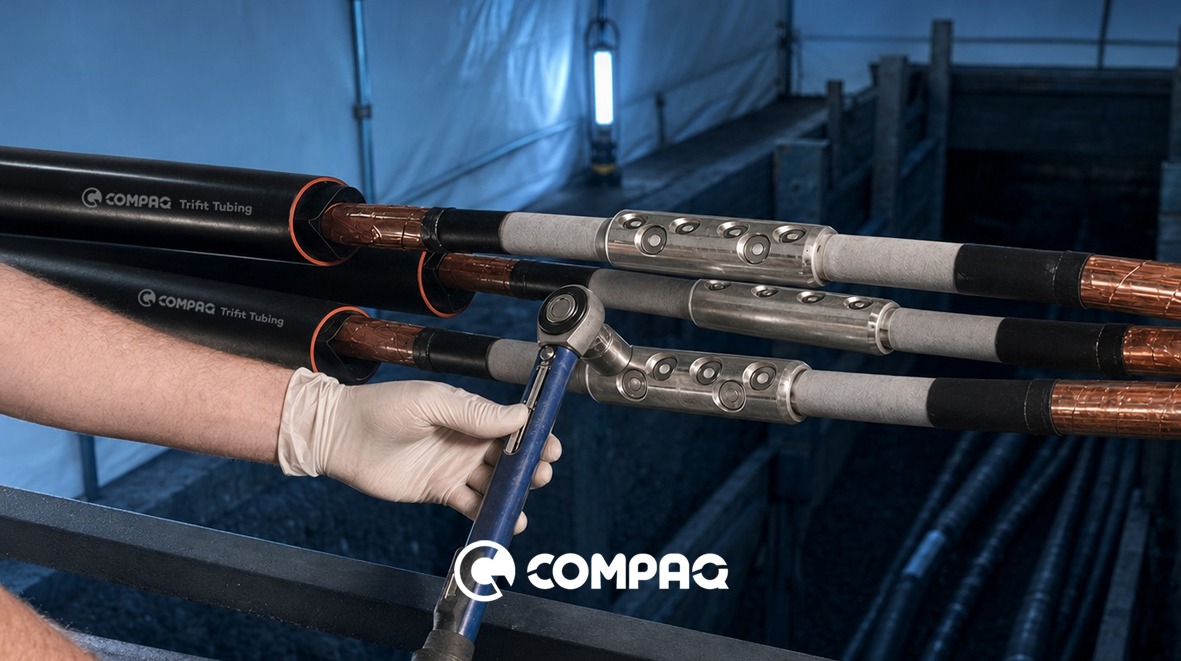
One Sleeve. Three Layers. A Better Medium-Voltage Cable Joint.
A cable joint should not become the weakest point of a power network.
But jointing a medium-voltage cable is not simple. The cable is prepared at site, the conductor is connected, insulation is rebuilt, electrical stress is controlled, and the cable screen and outer protection are restored.
In a traditional heat-shrink joint, the jointer may have to position and shrink multiple tubes one after another. Every additional component takes time. It also creates another chance for incorrect positioning, uneven heating or trapped air.
COMPAQ TriFit triple-extruded tubing makes this process simpler.
It combines three functional layers in one factory-engineered sleeve. One sleeve replaces multiple shrinking steps, provides higher recovery force and creates a slimmer joint that can be installed in less time.
Triple-extruded tubing is a single joint sleeve made with three layers:
All three layers are extruded together during manufacturing. The installer receives one pre-engineered joint body instead of several separate tubes.
Each layer has a clear job.
· Semi-conductive outer layer
The outer layer restores the insulation screen over the main joint body.
· Heat-shrinkable insulating layer
The middle layer provides the required electrical insulation. It also holds the inner elastomeric layer in its expanded condition before installation.
· Elastomeric insulating layer
The inner layer provides additional insulation and strong recovery force. It presses firmly against the prepared cable insulation and connector profile.
When the sleeve is heated, all three layers work together to form one compact joint body.
The main advantage is simple: fewer parts have to be installed at site.
With a traditional system, the jointer may have to shrink one tube, wait, position the next tube and shrink again. This takes more time and requires greater control at every stage.
TriFit combines the three main joint-body layers into a single sleeve.
This means:
A simpler process does not mean installation skill is no longer important. Proper cable preparation, cleanliness, connector installation and controlled heating are still necessary.
The difference is that the main joint body is already engineered as one component.
A cable joint must fit firmly around the cable insulation and connector.
If the interface is loose, small air gaps can remain between the joint sleeve and the cable. Under medium voltage, these weak areas can experience high electrical stress and may lead to partial discharge and insulation damage.
During installation, the heat-shrinkable layers of TriFit recover around the cable. At the same time, the inner elastomeric layer releases its stored recovery force.
These forces work together to create a firm electrical and mechanical interface.
This helps the sleeve:
This higher interface pressure is one of the main differences between triple-extruded elastomeric tubing and a traditional heat-shrink joint made with separate sleeves.
Site time matters.
Cable joints are often installed during shutdowns, project deadlines or emergency restoration work. Completing the joint correctly within the available time is important for utilities, EPC contractors and industrial plants.
Because TriFit uses one main joint sleeve instead of multiple tubes, the joint can be installed in fewer steps.
Under similar cable and site conditions, the system can reduce jointing time by up to 30-40% compared with a traditional multi-tube heat-shrink jointing method.*
The time saving comes from:
The objective is not to rush the jointer. It is to remove unnecessary steps while keeping the installation controlled and repeatable.
*Actual installation time can vary according to cable size, cable construction, site conditions and jointer experience.
Cable joints are not always installed in open areas.
They may have to fit inside cable trenches, joint bays, underground chambers, industrial cable routes or other locations where working space is limited.
The triple-extruded design reduces the number and total length of overlapping main insulation tubes. The joint body can be nearly half the tubing length used in some traditional multi-tube designs.
This provides:
A compact joint is also easier to support and protect after installation.
The exact finished dimensions depend on the cable size, voltage class and joint configuration.
Every component added at site must be selected, positioned and installed correctly.
More components mean more instructions, more measurements and more chances for something to go wrong.
A triple-extruded sleeve combines three layers into one pre-engineered joint unit. This reduces the number of individual components in the kit and makes the jointing process easier to follow.
For the installer, this means:
This is particularly useful for large utility and infrastructure projects where many joints are installed by different teams.
A power cable does not remain at one temperature.
Its temperature rises when the electrical load increases and falls when the load reduces. This repeated heating and cooling causes small dimensional changes in the cable insulation.
A cable joint must follow these movements without losing contact with the cable.
The elastomeric inner layer of the triple-extruded sleeve helps maintain interface pressure during these load changes. Its flexibility allows it to follow small movements in the cable insulation while the outer layers keep the joint body in position.
This helps maintain a stable interface during normal service.
However, tubing alone does not determine the life of a cable joint. Long-term performance depends on the complete joint system, correct product selection and proper installation.
Triple-extruded tubing is the main insulation body, but other components are still required to complete a medium-voltage cable joint.
Depending on the joint design, these may include:
The conductive outer layer restores the screen over the joint body. It should not be confused with the complete stress-control arrangement at the cable screen cuts.
Similarly, final moisture and mechanical protection comes from the complete sealing and oversheath-restoration system, not only from the triple-layer sleeve.
A reliable joint is created when all these components are designed, tested and installed as one complete system.
COMPAQ TriFit is designed for medium-voltage cable-joint applications up to 66kV.
It can be used in:
TriFit joint systems can be configured with mechanical shear-bolt, depending on the cable and project requirements.
Conductor size alone is not enough to select an MV cable joint.
Before finalising the kit, confirm:
1. Cable voltage
2. Single-core or three-core construction
3. Conductor size and material
4. Actual cable insulation diameter
5. XLPE or EPR insulation
6. Type of metallic screen
7. Armour construction
8. Mechanical or compression connector requirement
9. Installation location and conditions
10. Applicable utility or project specification
Two cables with the same conductor size may have different insulation diameters. That is why the cable data sheet or actual site measurement should always be checked.
Before selecting a system, check:
TriFit brings three important layers together in one factory-engineered sleeve.
The result is clear:
The idea is not to make jointing look easy.
The idea is to make a critical job more controlled, faster and more consistent.
One sleeve. Three layers. Fewer steps. A better joint.
What is triple-extruded tubing?
It is a one-piece cable-joint sleeve containing three factory-extruded layers: a semi-conductive outer layer, a heat-shrinkable insulating layer and an elastomeric insulating inner layer.
How is it different from traditional joint tubing?
A traditional heat-shrink joint may require multiple tubes to be positioned and shrunk separately. Triple-extruded tubing combines the three main joint-body layers into one sleeve.
How does TriFit reduce installation time?
It reduces the number of components and separate shrinking steps. Under similar installation conditions, jointing time can be reduced by up to 40%.
What is the purpose of the ribs on the tubing?
The raised ribs gradually disappear during correct heating. They give the jointer a visual indication that adequate heat has been applied and the sleeve has recovered properly.
Does triple-extruded tubing provide stress control?
It restores insulation and the conductive screen over the main joint body. Separate stress-control components may still be required at the cable screen cuts, depending on the complete joint design.
Can TriFit be used with mechanical connectors?
Yes. TriFit joint systems can be configured for mechanical shear-bolt or compression connectors. Compatibility should be confirmed for the complete tested joint system.
What voltage range is available?
COMPAQ TriFit is designed for medium-voltage cable-joint applications up to 42 kV. Final selection depends on the system voltage, cable construction, conductor size and insulation diameter.
Written by: COMPAQ International Technical Team
Technically reviewed by: Naveen Kumar- Sr. Application Engineer
COMPAQ International designs and manufactures power cable joints, terminations and related cable accessories for utility, renewable-energy, industrial and infrastructure networks.
References

Need Help?
Our experts are ready
Our experts are available for on-site support, remote
guidance and tailored engineering.