

Types
Position
Layout
blog
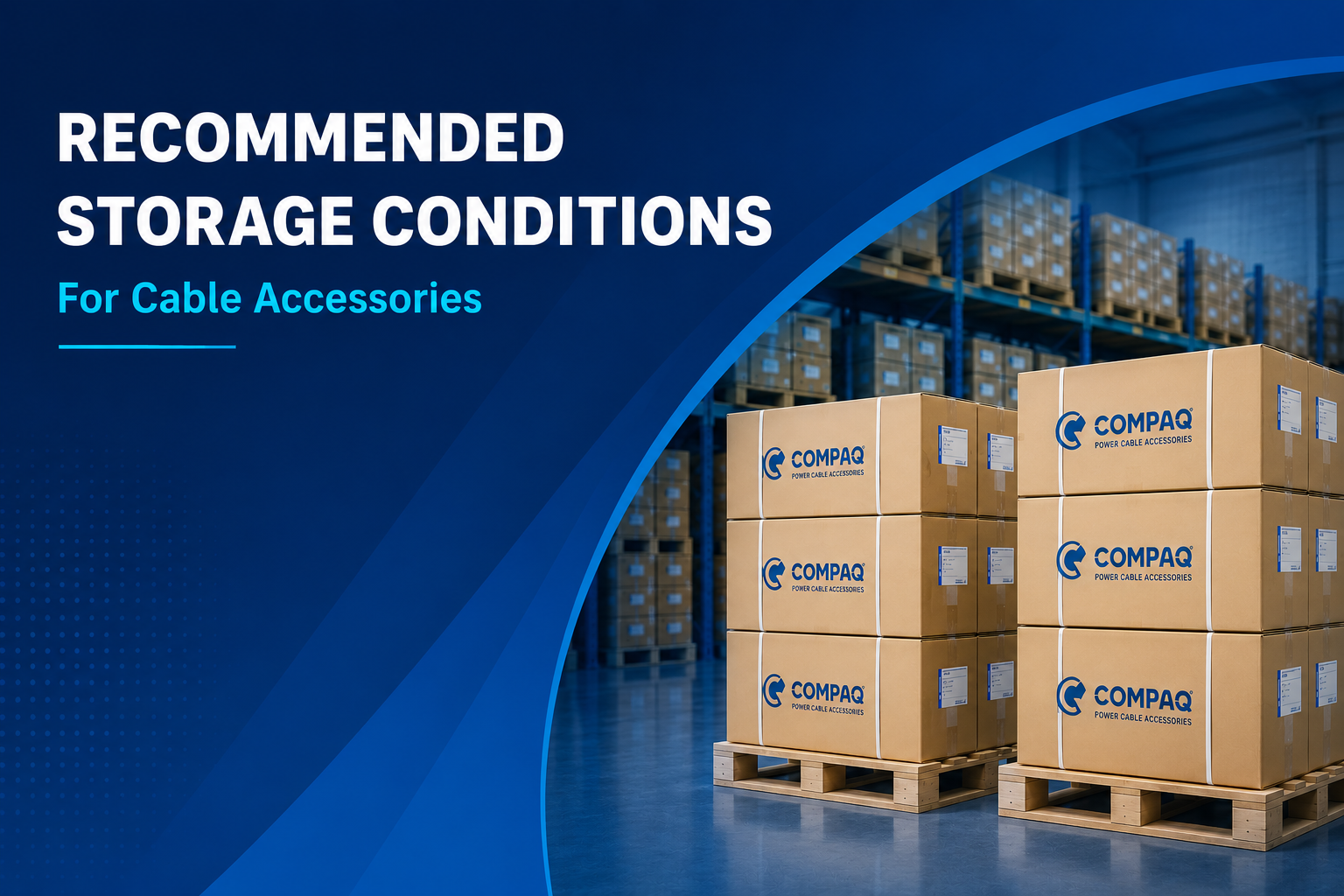
When engineers receive a cable joint or termination kit, the first question is usually about ratings, compatibility or installation.
The next important question is often overlooked.
Many cable accessories are installed months after delivery. Large utility projects, renewable energy plants, metro projects and industrial expansions frequently purchase materials well in advance. If storage conditions are poor, even a perfectly manufactured product can become difficult to install or fail to perform as intended.
The good news is that most modern cable accessories are designed for long storage periods provided they are stored correctly.
This guide explains what manufacturers, utilities and contractors should know about storage conditions, shelf life and good warehouse practices.
Cable accessories are engineered products.
They contain carefully selected polymeric materials, mastics, sealants, stress control components, conductive layers, metallic parts and installation accessories.
Although these materials are highly durable, improper storage may lead to:
Storage does not usually damage the electrical design directly.
Instead, it often affects the condition of components before installation.
A medium-voltage joint or termination kit may include:
Each material responds differently to temperature, humidity and sunlight.
Proper storage protects every component until installation.
1. Store Indoors Whenever Possible
Indoor storage is always preferred.
The warehouse should be:
Avoid open yards unless specially designed weatherproof storage is available.
2. Protect from Direct Sunlight
Continuous UV exposure can affect packaging and certain polymeric materials over time.
Store kits:
Never leave kits exposed on construction sites for extended periods.
3. Maintain Moderate Temperature
Most manufacturers recommend storing cable accessories under normal warehouse conditions.
Avoid locations exposed to:
Large temperature fluctuations may also create condensation inside packaging.
4. Keep the Storage Area Dry
Moisture is one of the biggest enemies of electrical installation materials.
Although sealed packaging provides protection, prolonged exposure to damp environments may affect:
Good warehouse humidity control is recommended.
5. Keep Products in Original Packaging
Manufacturers design packaging to protect components during transport and storage.
Avoid removing items until installation.
Original packaging helps:
6. Avoid Mechanical Damage
Do not:
Mechanical deformation may affect installation quality.
This is one of the most common questions from utilities and EPC contractors.
The answer depends on:
Under recommended storage conditions, modern medium-voltage cable accessory kits are generally designed for long-term storage while maintaining their installation and performance characteristics.
Some utility specifications may require manufacturers to provide documentary evidence supporting extended storage capability or service life expectations. Always refer to the product documentation and project requirements.
Heat shrink components are typically made from cross-linked polymeric materials.
When stored correctly:
Improper storage may expose products to contamination or physical damage rather than ageing itself.
Cold shrink accessories use factory-expanded silicone rubber components.
They should be stored:
The removable support core should never be disturbed before installation.
Before opening a kit, installers should inspect:
✔ Packaging condition
✔ Product identification
✔ Manufacturing batch
✔ Completeness of kit
✔ Physical damage
✔ Moisture signs
✔ Missing accessories
✔ Installation instructions
If anything appears abnormal, the manufacturer should be contacted before installation.
Common Storage Mistakes
These issues are surprisingly common on project sites.
Leaving kits outdoors
Rain and sunlight gradually damage packaging.
Mixing different kits
Small components can easily become misplaced.
Opening cartons too early
Dust contamination increases significantly.
Storing near chemicals
Solvents and oils may affect polymer materials.
Ignoring first-in-first-out (FIFO)
Older inventory should normally be used before newer deliveries.
Utilities and contractors often implement simple inventory controls such as:
These practices reduce installation issues and improve traceability.
Storage During Long Projects
Large infrastructure projects may extend over several years.
For long-duration projects:
Good storage management is just as important as good installation practices.
No.
These are completely different concepts.
|
Shelf Life |
Service Life |
|
Time product remains suitable for storage before installation |
Expected performance after installation under operating conditions |
|
Depends on storage environment |
Depends on design, installation, loading and operating conditions |
|
Controlled by warehouse practices |
Influenced by electrical, thermal, environmental and mechanical stresses |
Understanding this distinction helps avoid confusion during procurement and technical evaluations.
As utilities modernize their supply chains, storage practices are becoming more data-driven. Some emerging trends include:
These practices support higher installation quality and lower project costs, especially on large transmission, renewable energy, and urban infrastructure projects.
Can cable accessory kits be stored outdoors?
Outdoor storage is not recommended unless specifically approved by the manufacturer and adequately protected from weather, UV exposure, and moisture.
Should packaging be opened before installation?
No. Keep the kit sealed in its original packaging until it is ready to be installed.
Does high temperature affect cable accessories?
Prolonged exposure to excessive temperatures may affect packaging, sealants, or installation consumables. Always follow the manufacturer's recommended storage conditions.
Is FIFO important?
Yes. Using older inventory first helps maintain organized stock rotation and reduces the likelihood of unnecessary long-term storage.
Should stored kits be inspected?
Yes. Periodic visual inspections help identify packaging damage, missing labels, or signs of moisture before installation.
Final Thoughts
Reliable cable systems begin long before installation. Proper storage protects the integrity of every cable joint, termination, and accessory, helping ensure they perform as intended when finally put into service.
Whether you're managing inventory for a utility warehouse, an EPC contractor, or an industrial project, following the manufacturer's storage recommendations, maintaining clean and dry conditions, preserving original packaging, and implementing disciplined inventory practices can significantly reduce installation risks and improve project reliability.
In power networks, attention to detail matters and good storage practices are one of the simplest ways to safeguard long-term performance.
To understand where heat shrink technology is preferred over cold shrink systems, read our detailed Heat Shrink vs Cold Shrink comparison.

Need Help?
Our experts are ready
Our experts are available for on-site support, remote
guidance and tailored engineering.